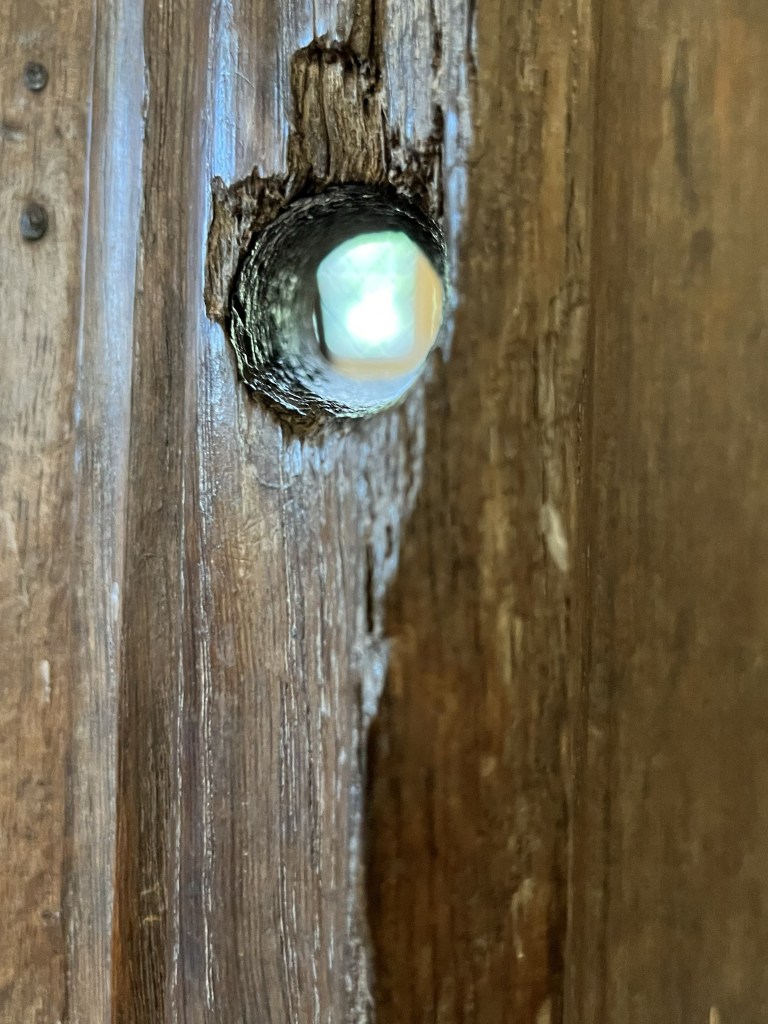
I thought this was something pious Christians just chose to do. But it was a serious vocation, which involved convincing a bishop the person was suitably pious, had been granted a hermitage, and could support himself, similar to a modern candidate for ordination.
There was a defined service whereby the recluse was assessed and formally admitted. Surprisingly it included a clause that he must work to obtain food. But the real surprise is that he must make roads and bridges” so was an early engineer! “As idleness us the enemy of the soul”.
The image of hermit saints living in the wilderness and foraging for food probably dated to the earliest times, surviving into the Middle Ages. But by 12th century England they were mostly bid noble birth, sometimes owning significant property but seeking a life of pious meditation. Some had rooms attached to their chapel, a garden, cow, land and even servants and a chaplain to say masses in their chapel.
But by the time of Henry II hermits-alone or in small groups- were scattered across the countryside often caring for ferries and bridges or repairing roads as well as sheltering travellers.
“When inns were practically non-existent and religious houses were the chief resting-places for travellers, the tinkle of a hermit’s chapel bell in some dark forest or across a lonely windswept moor must have been a welcome, perhaps life saving sound.”