This is from Stow’s Survey of London in Walbrook ward:
“On the south side of (Walbrook) High Street, near unto the channel, is pitched upright great stone called London stone, fixed in the ground very deep, fastened with bars of iron, and otherwise so strongly set, that if carts do run against it through negligence, the wheels be broken, and the stone itself unshaken.
The cause why this stone was set there, the time when, or other memory hereof, is none, but that the same hath long continued there … before the Conquest; for in the end of a fair written Gospel.. one parcel is described to lie near into the London Stone. …“
Some have said this stone to be set as a mark in the middle of the city within the walls; but in truth it standes far nearer unto the river of the Thames than to the wall of the city; some others have said the same to be set for the tendering and making of payment by debtors to their creditors at their appointed days and times, till of later time payments were more usually made at their appointed font in Pont’s church and now most commonly at the Royal Exchange.
The following is from @SarahBlick3 :
“I believe this was widespread because baptism churches had legal jurisdiction m, as people often paid their taxes there, do other payments make sense. [Littleton,Tenures,B. iii, c.v. 342, Section CCCXLII pp 72-3]
In the 16th & 17th centuries, payments were often made at the font of St Paul’s, London and the Bishop of Durham, James Pilkington (1560) mentions bargains. meetings and brawls in the church central aisle but also “the font for ordinary payment money as well known to all men.”
“In St Paul’s Cathedral, London, people met at the church to conduct secular business.Lawyers stood near certain pillars to meet their clients and at the roof lift, certain tombs, and the font were places used for payments, especially mortgages.
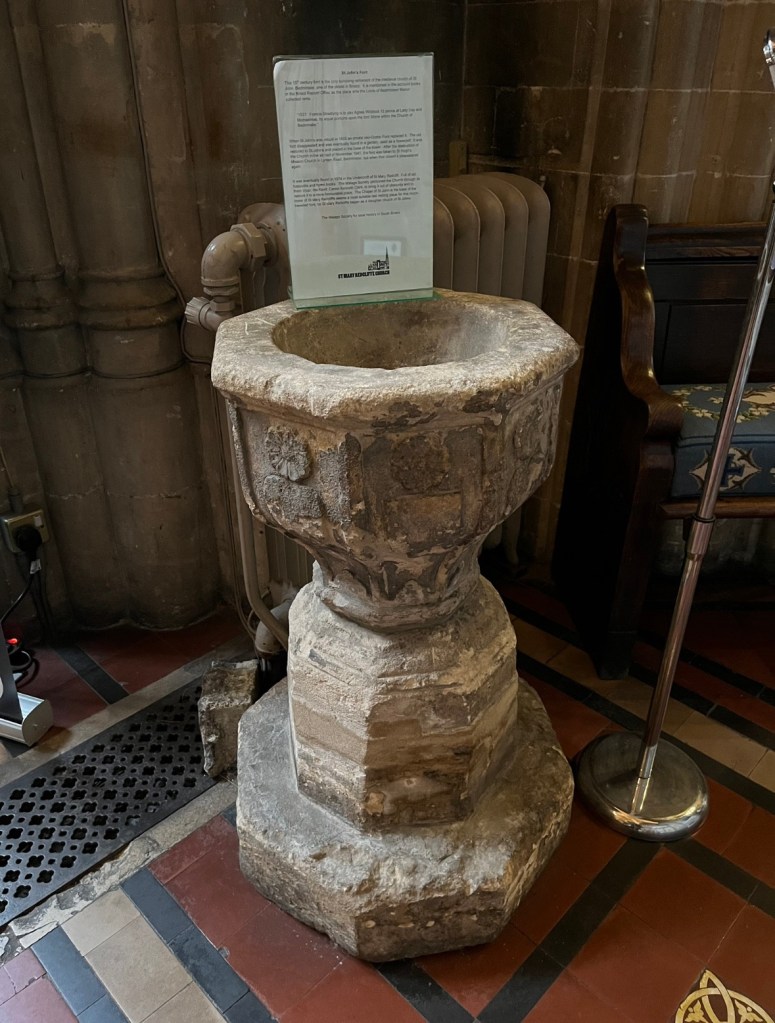
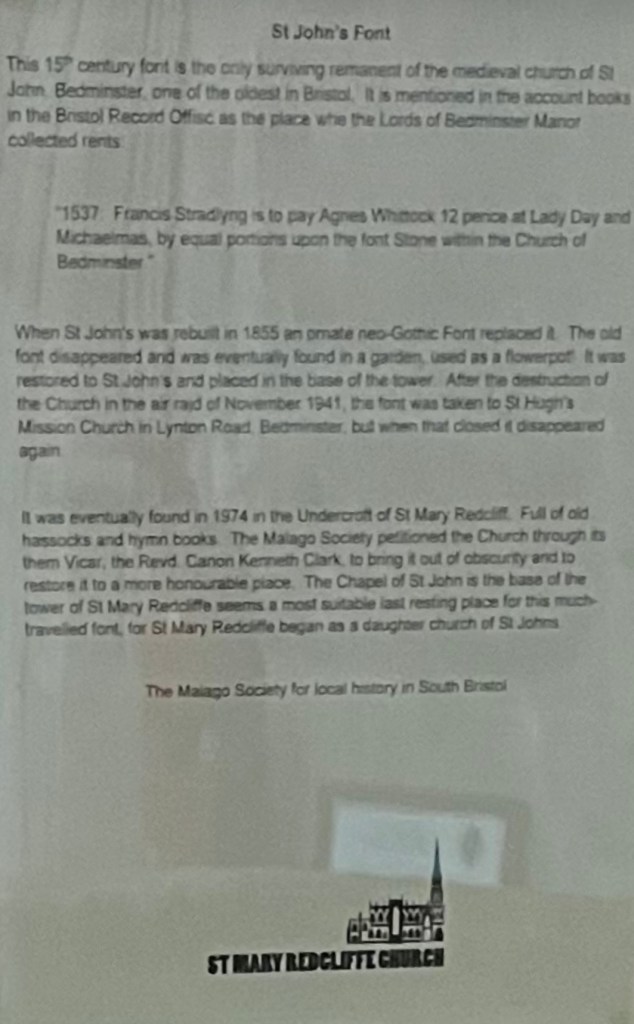
Not only St Paul’s, but another example of: People paid their rent at the font of St John, Bedminster, now in St Mary Redcliffe. “1537: Francis Stradlyng is to pay Agnes Whitlock 12d at Lady Day and Michaelmas, in equal portions upon the font stone.”
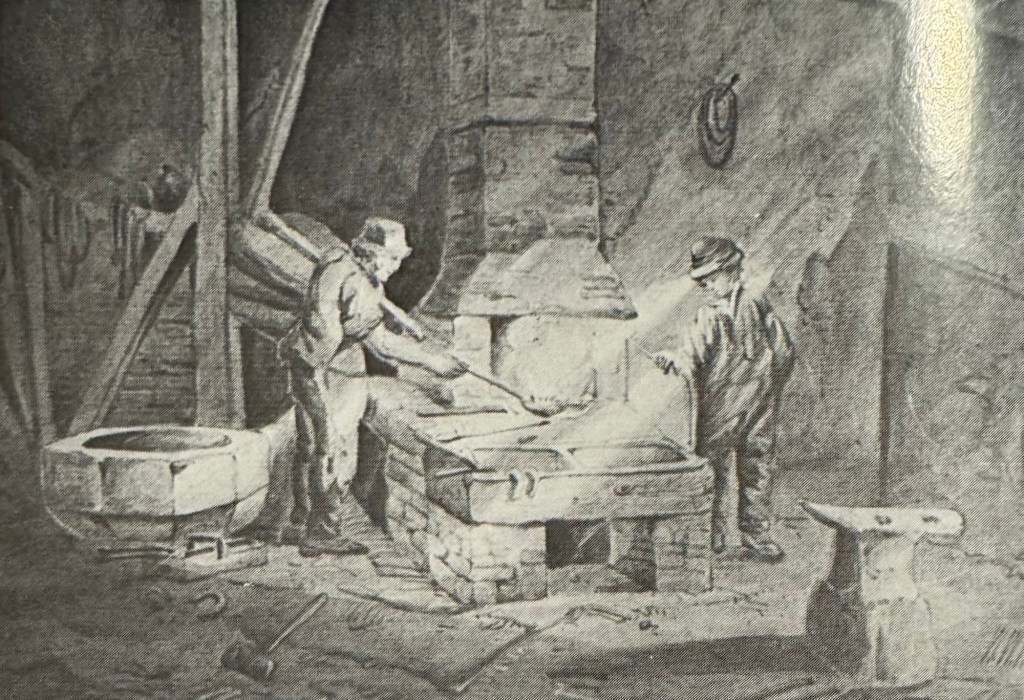
Another use for fonts, possibly dating from the The Reformation and vandalism was by Blacksmiths. This image comes from Rural Life In Wessex by J H Bettey.
“This drawing by W.W. Wheatley shows the interior of the Blacksmith’s shop at Monkton Combe near Bath in 1850.. what is apparently the church font being used to hold water for ‘drenching’ the heated iron.
 barb drummond curious historian