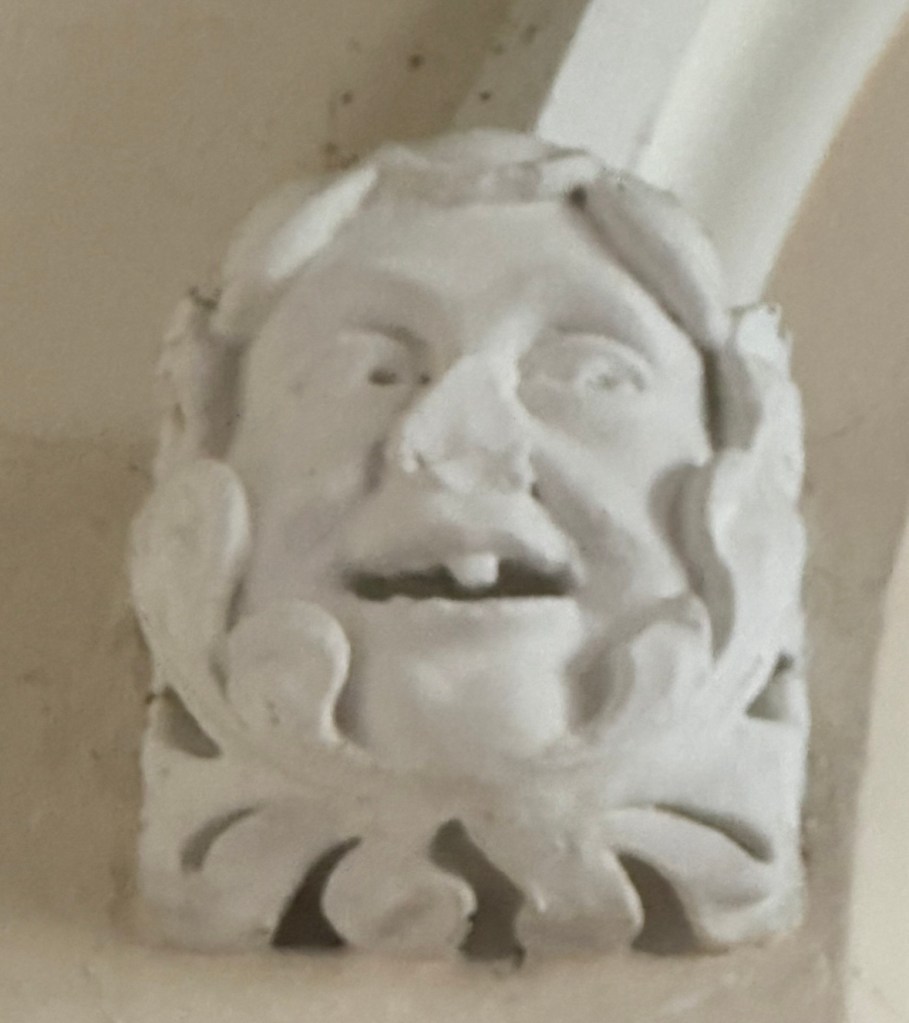
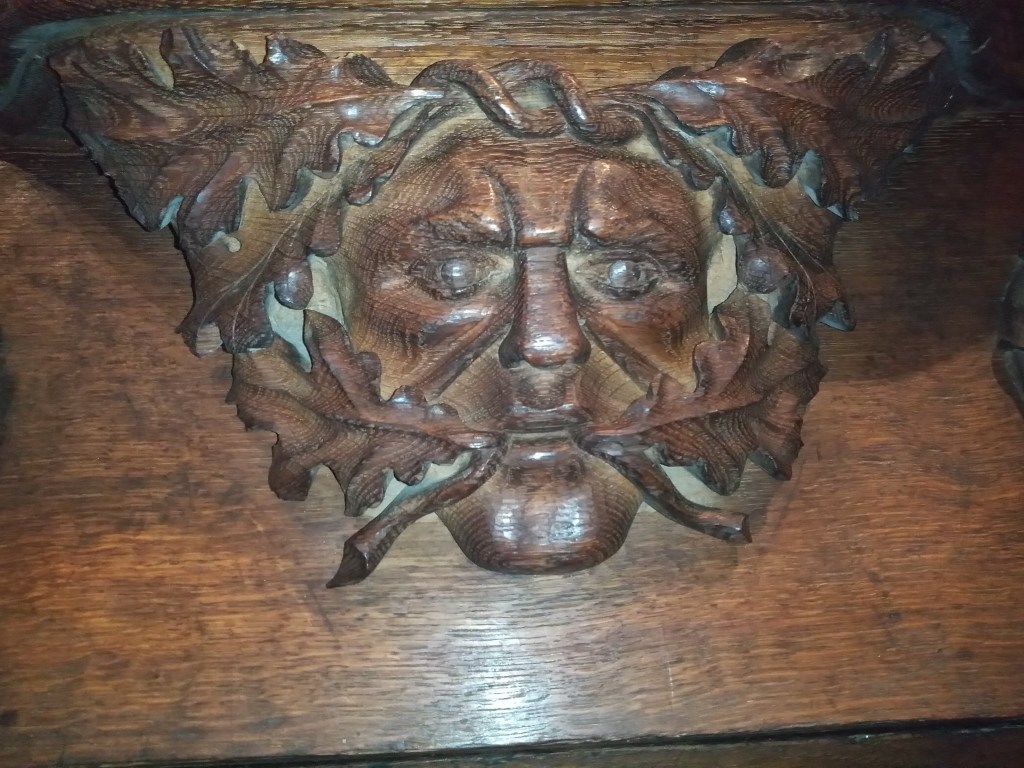
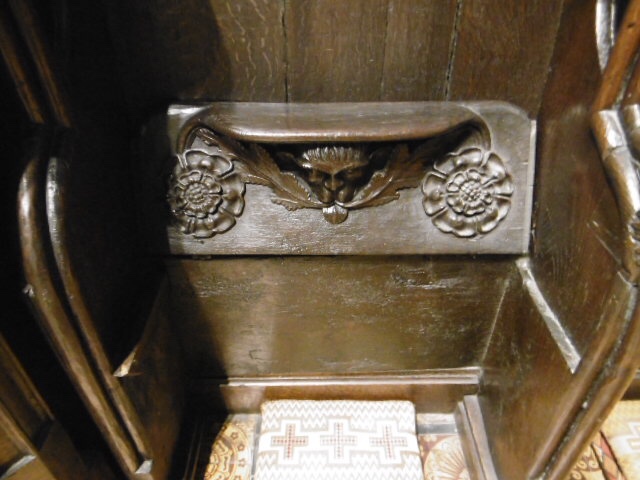
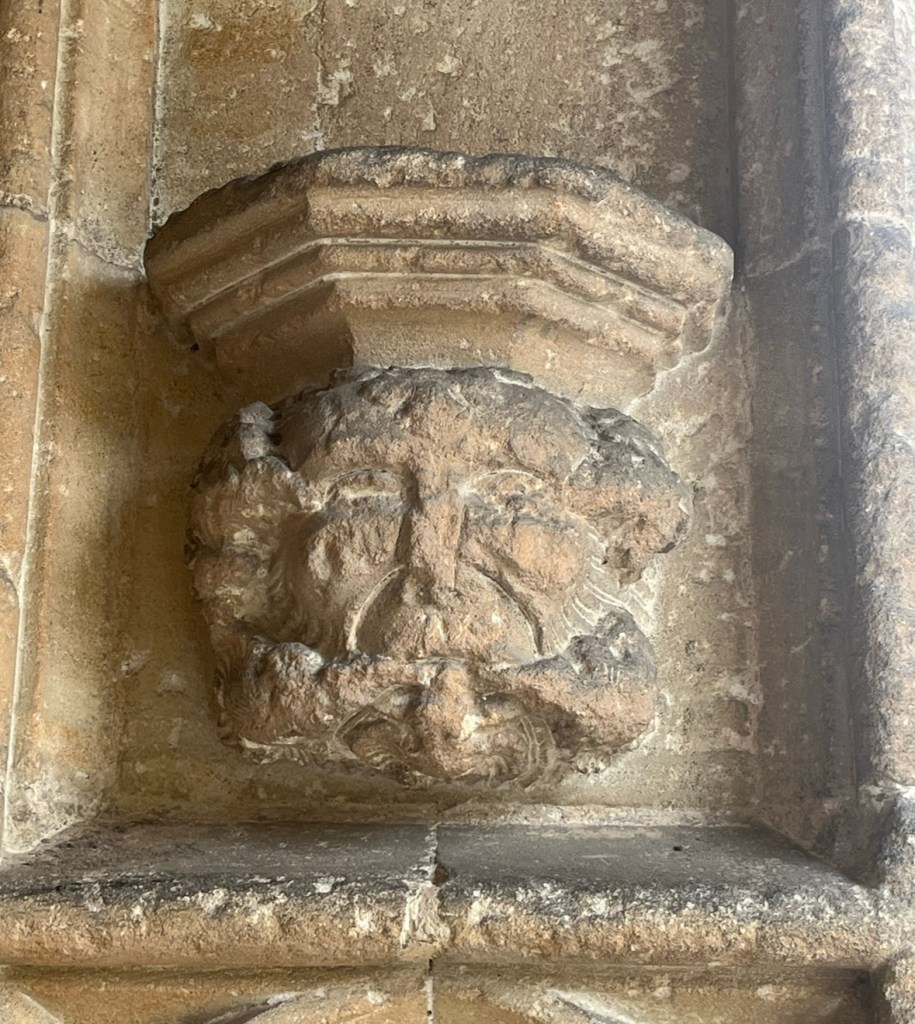
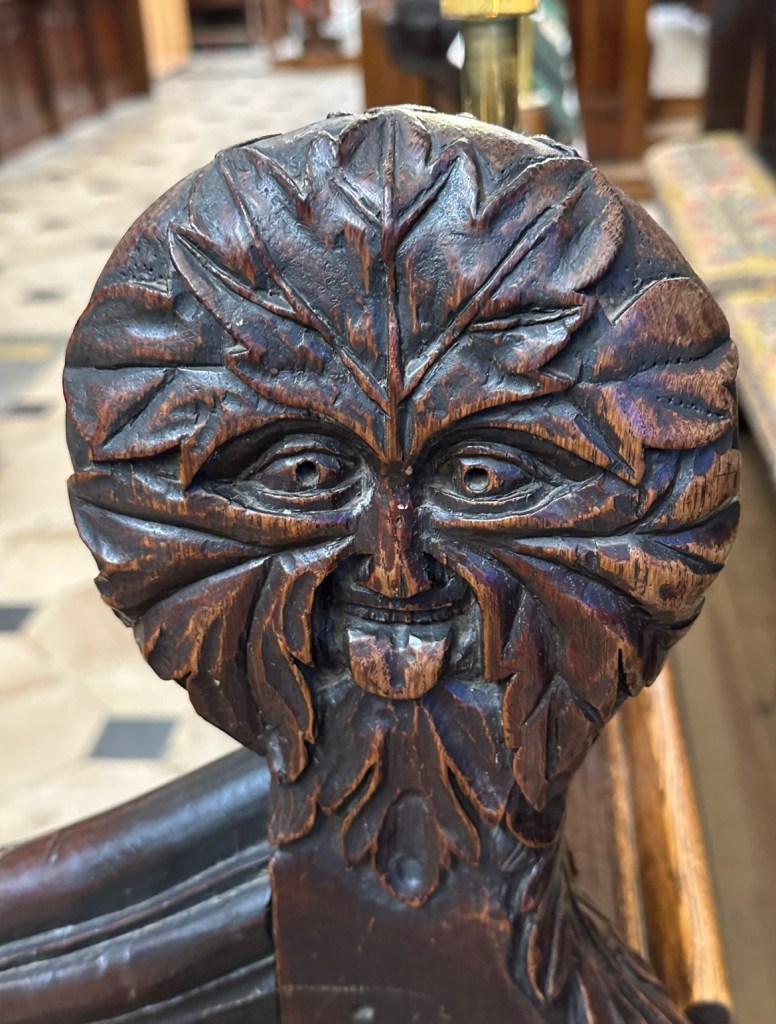
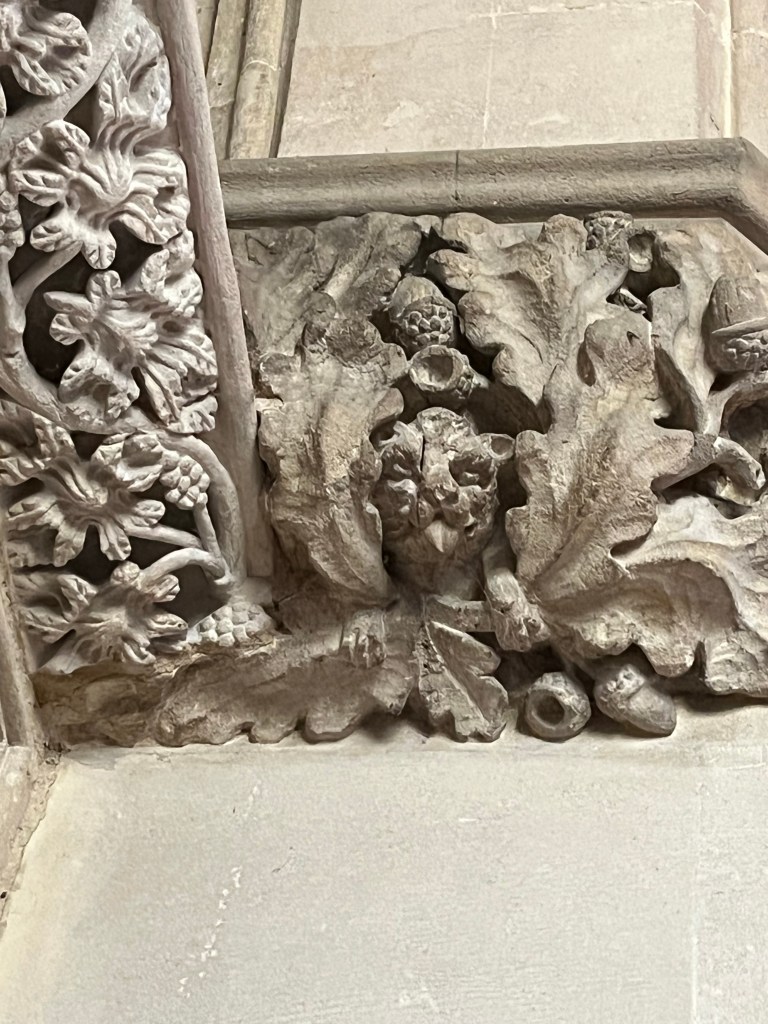
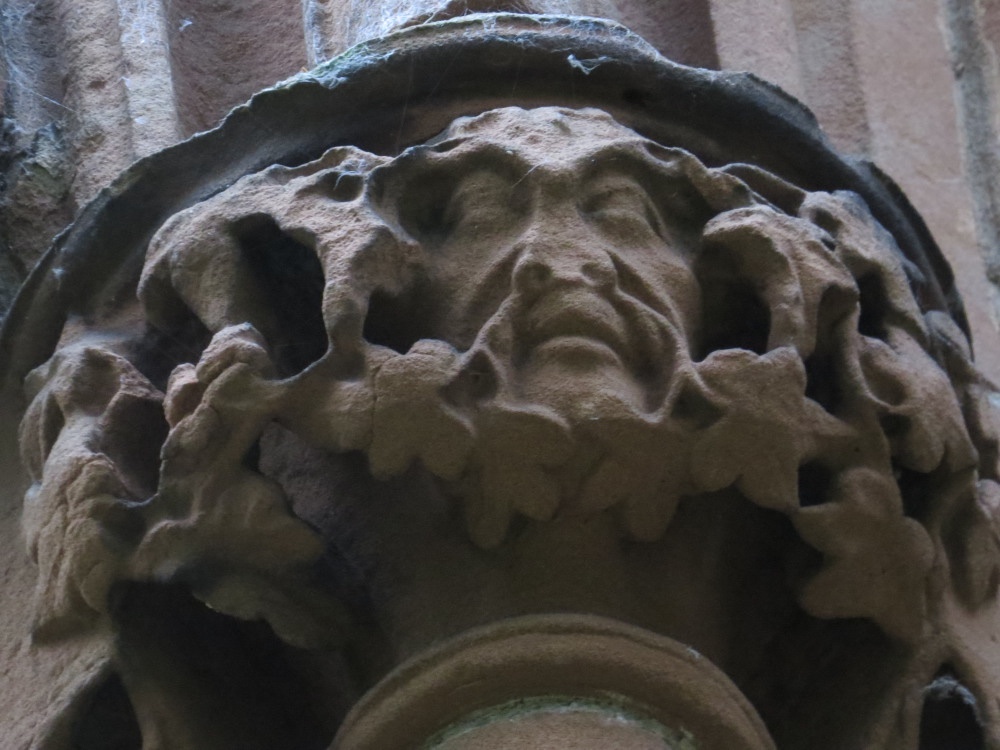
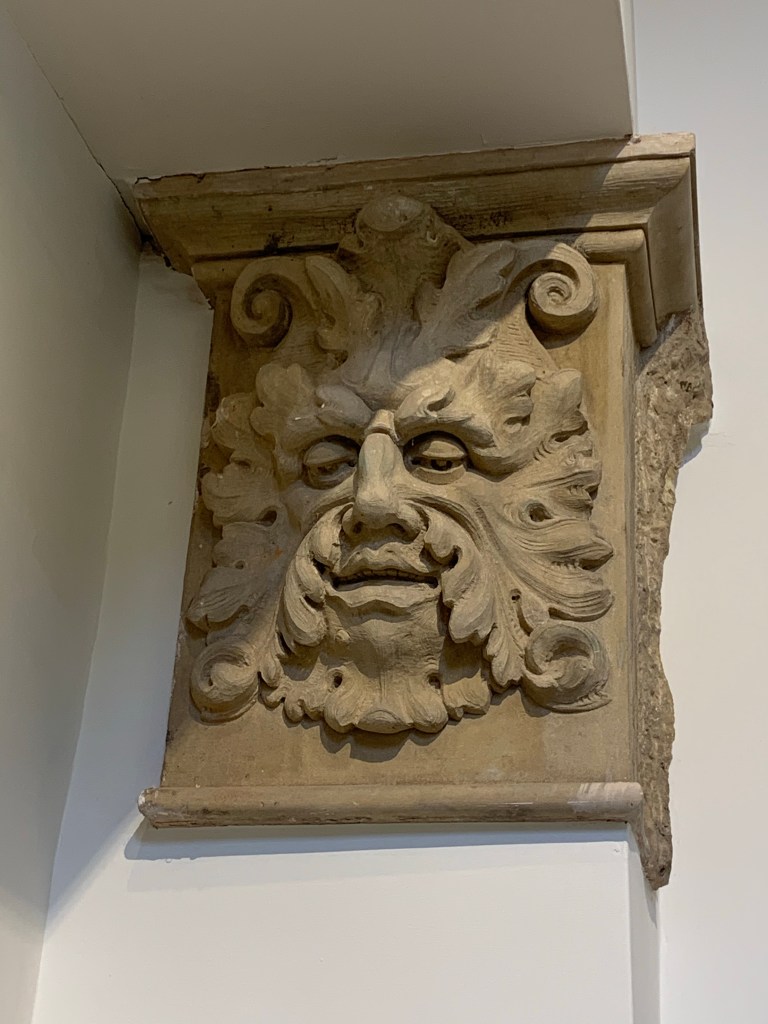
Foliage sprouting from or surrounding a human face is one of the most common images in folklore. They are also found in churches, though often with humorous or folkloric elements, especially on misericords. This leads to a lot of chicken and egg arguments as to their origins. Here’s a few images I’ve collected.
This is from St Collen, Llangollen, Denbighshire, with consent @pacoulmagOld Easter Sepulchre, Monkleigh, Devon. With consent @DevonChurchLandFrom porch, boundary between sacred and secular, Whitminster, Gloucestershire
This is from St Mary’s church, Lupitt, East Devon with permission from @Portaspeciosa
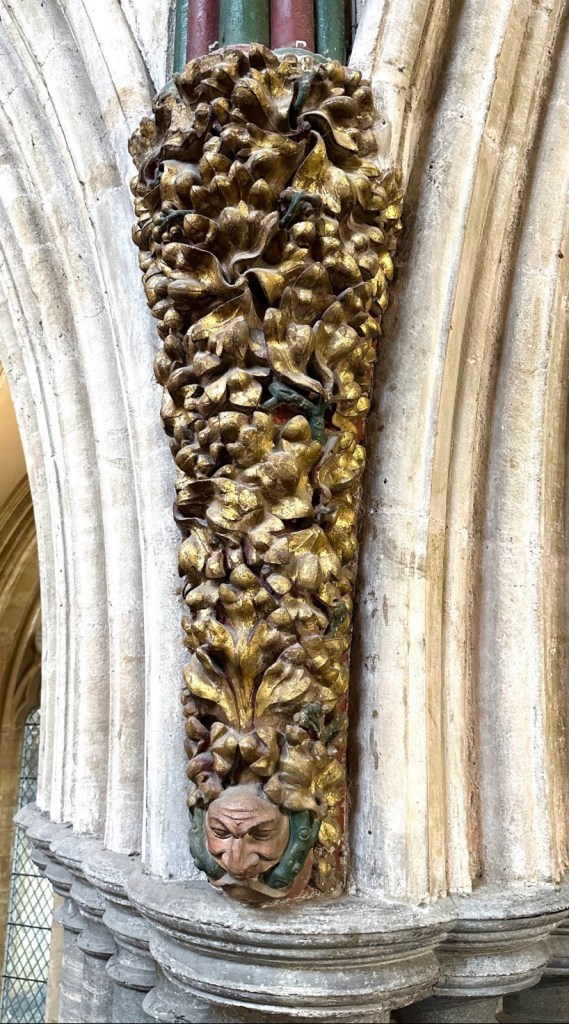
National Trust property Cotohele, provided by RosemaryBriggsSlightly damaged, Ely Cathedral
This is from Exeter Cathedral. With permission from Andy Marshall.
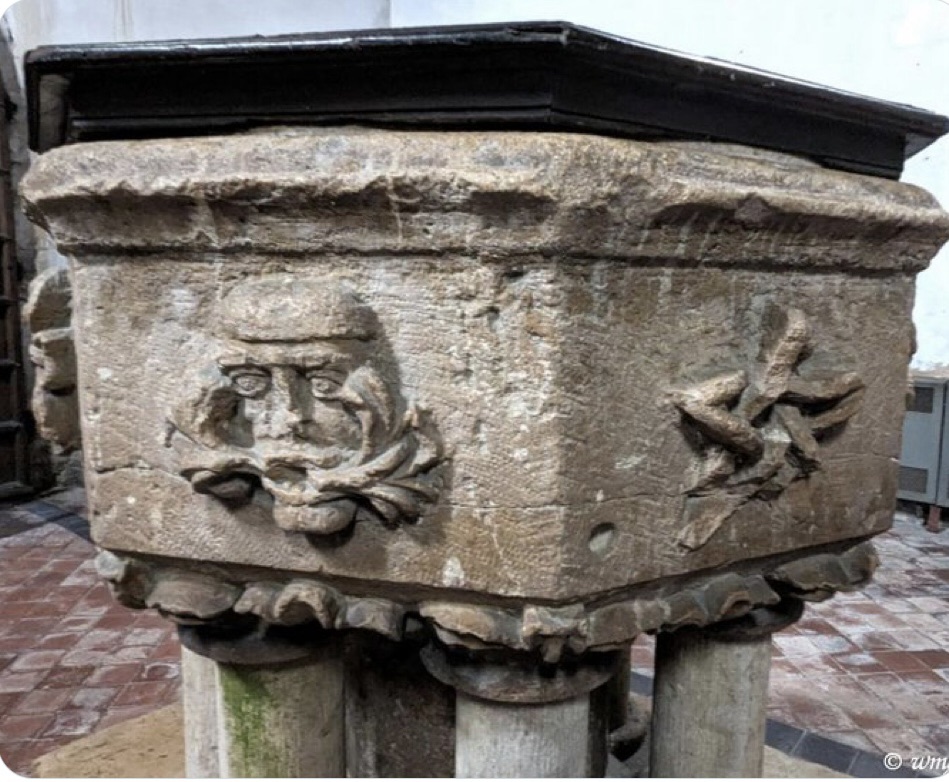
From high up in Exeter Cathedral. thanks to Andy Marshallkings Lynn misericord thanks to Judy Doherty Very unusual sight on 13th century font at Dt Mary, Stowminster. Lincolnshire. Includes dragons so again not very Christian From Legbourne Woldmarsh, Lincolnshire. Bat-line version from Dumbleton church, Cotswolds. Image courtesy of Kirsty Hartsiotis
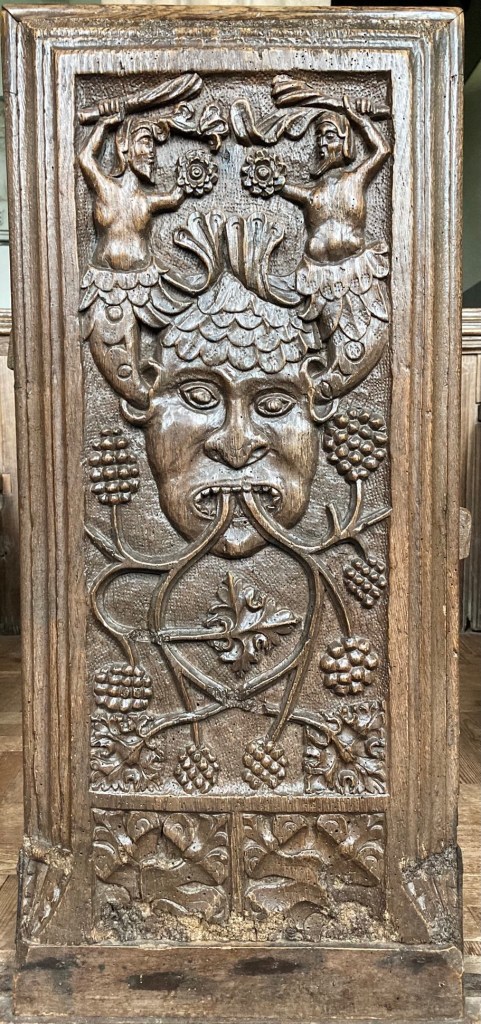
This is a bench end in Bristol’s Lord Mayors Chapel across from the Cathedral
Bench end in St Marks, Lord Mayor’s chapel BristolWakefield Cathedral misericords Hereford Cathedral looking very lifelike & modern Misericord, All Saints, HerefordAston Hall near Birmingham Northleach PorchHigh up on pillar, Much Markle church, Hereford
These are from Llangwm Uchaf
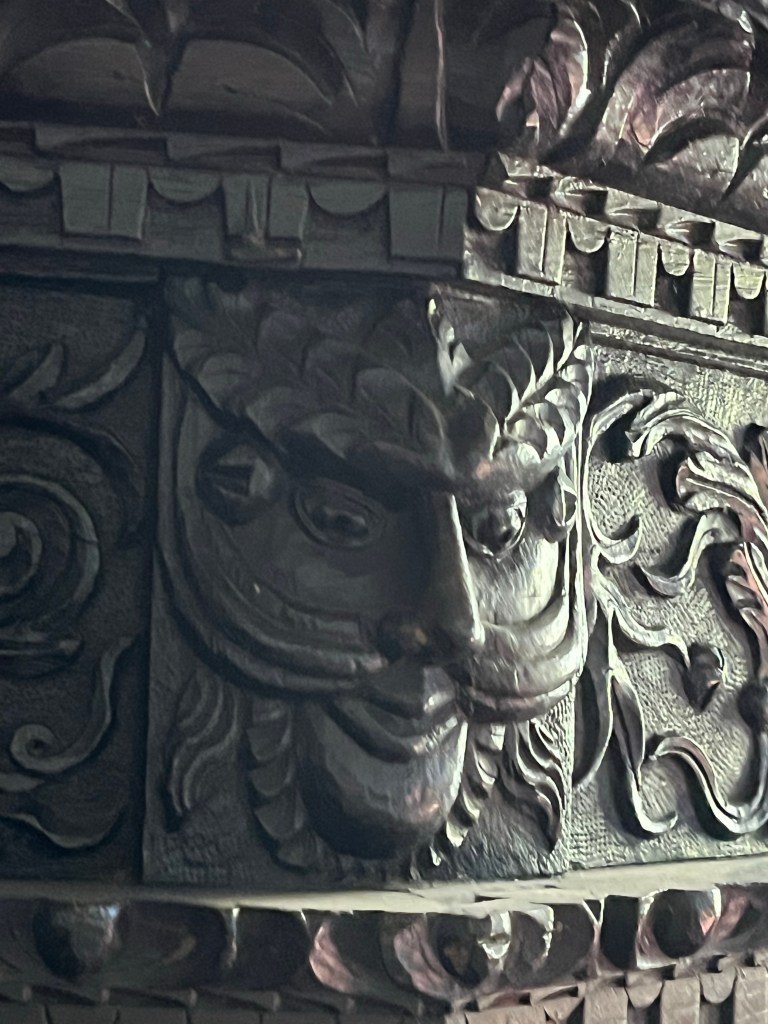
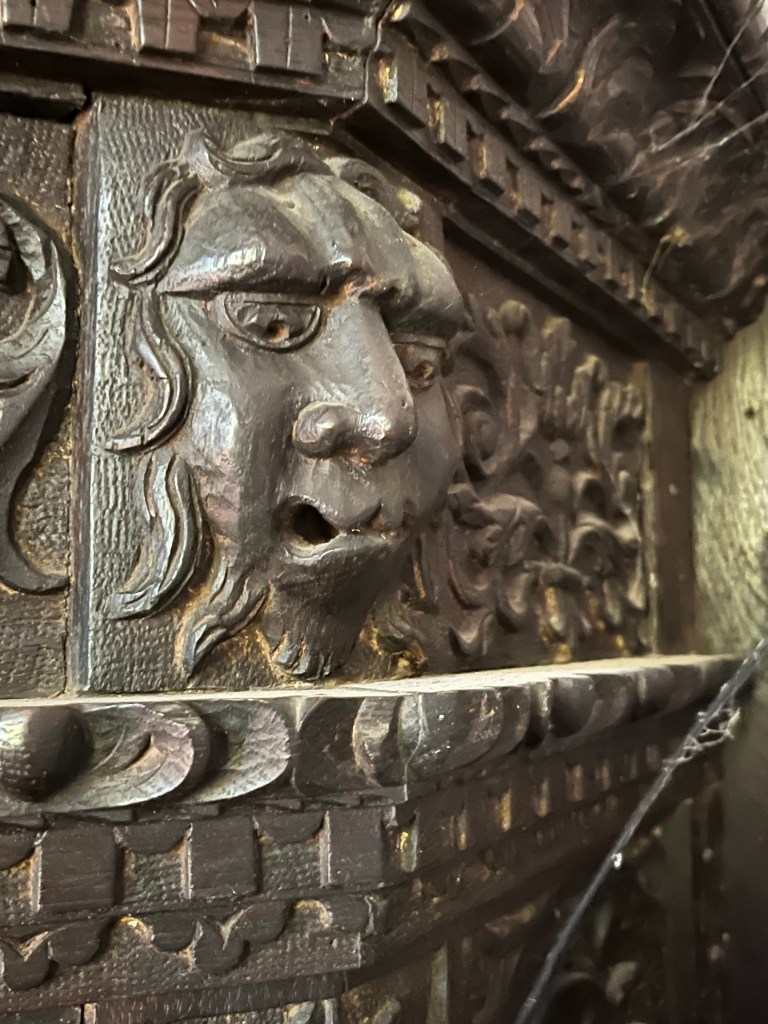
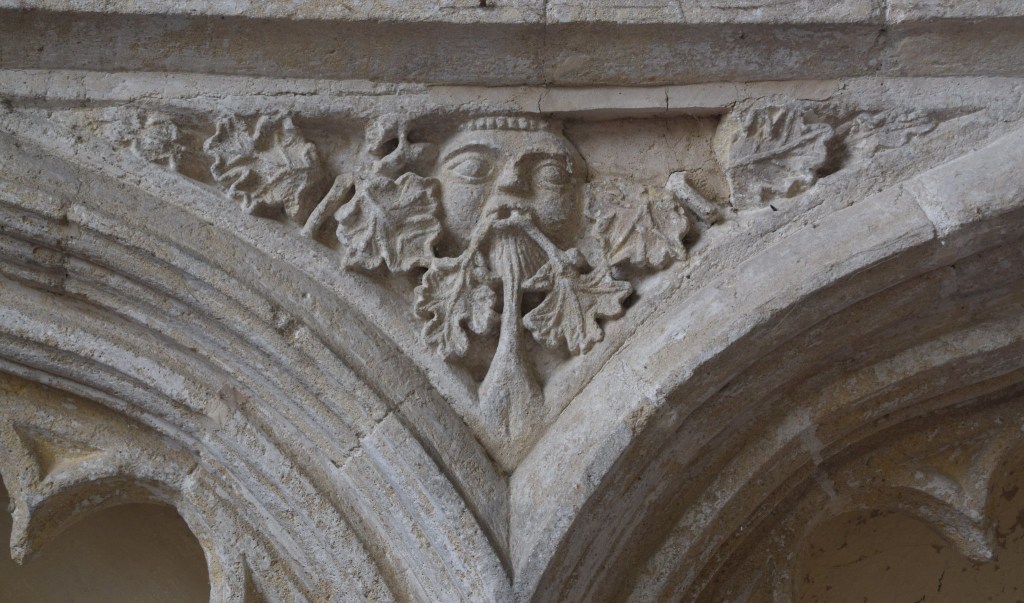
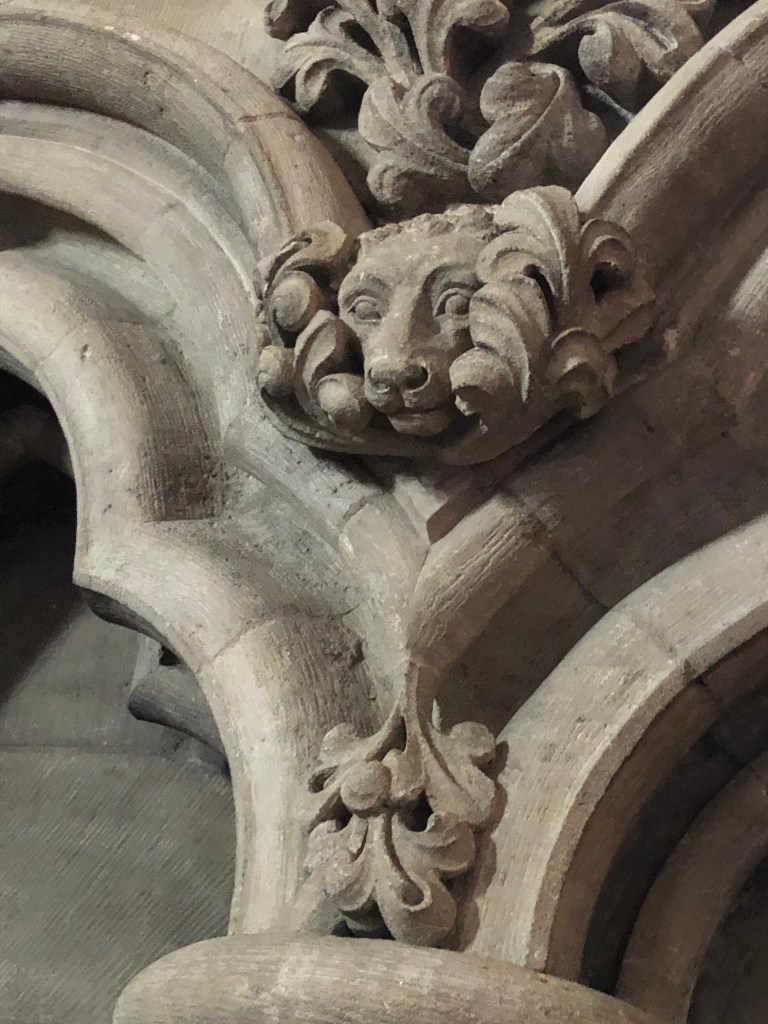
Llangwm UchafFownhope, St Mary, roof boss Medieval example from Wells, Bishops Palace This is from Quire, Winchester Cathedral with consent Carole BoweThis is from Little Wadingfield, Suffolk. Image from John VigarUnusual images from Broomfield, Somerset.only one I’ve seen on a gateSutton Bangor Green Man also some identifiable birdsYatton Keynall screen some sort of wildcat?Llantillio CrossenyUnusual profile image, 17th century Welsh Cupboard in Burrel Collection, @megthelibraria1 12th century tympanum from North door, St Leonard’s Shropshire. With permission from Andy MarshallUnusual in having foliage from nose rather than mouth. St Mary’s Temple Balsall, Warwickshire Brecon Cathedral, Wales. Not foliate as others but seems same concept
This is a wonderfully weird bench end from Crowcombe in Somerset courtesy of Liam Simms
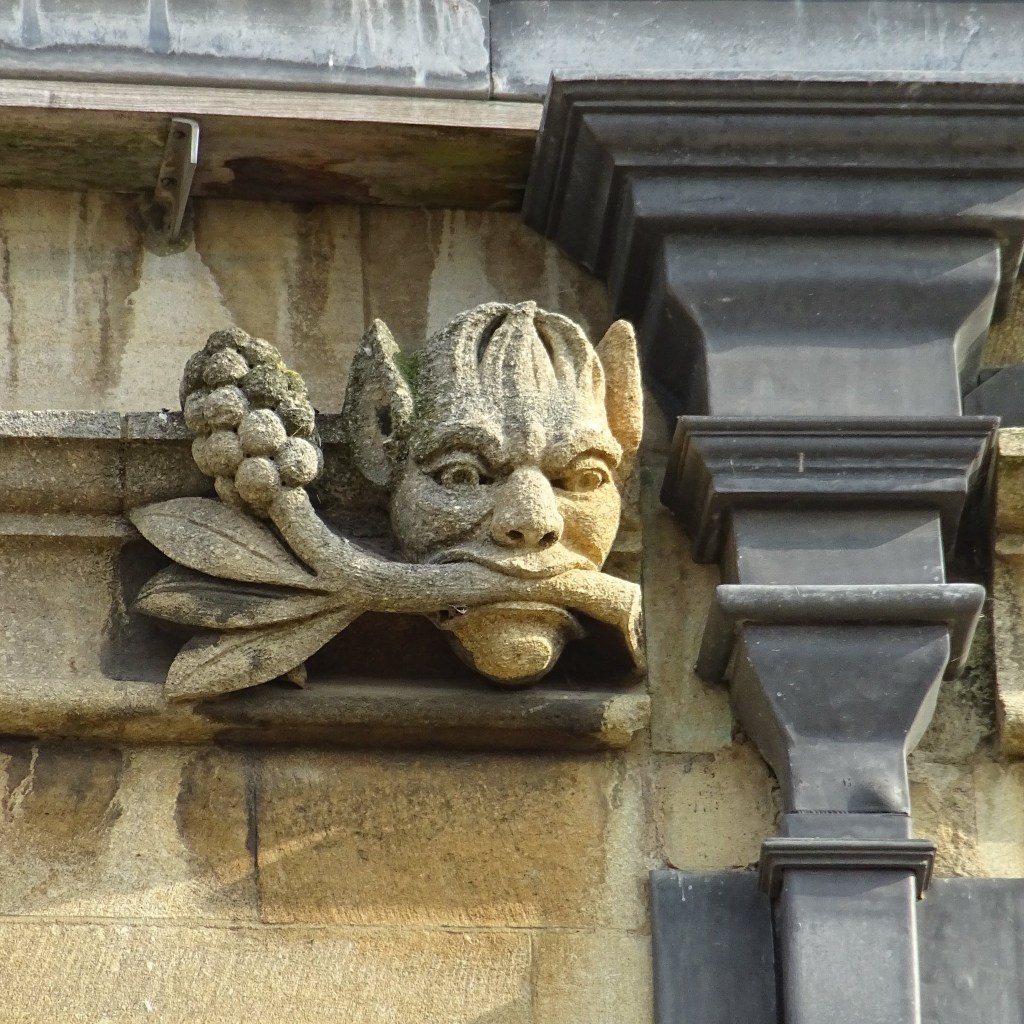
Wonderfully weird bench end from Crowcombe, Somerset. From Liam SimmsMaybe stretching definition here, but interesting from Stogursey Priory. Carver Glosse 1524-9Perhaps borderland here but interesting from Enmore St Michael, pulpitThis is from St Leonard’s, Linley again thanks to Andy MarshallRainwater goods, Bodleian Library. Looks like imp being eating rather than eaten by foliage. thanks to Cathy Rosamond Stillman Lowe From above source, Christ Church College, Oxford
From National Trust’s Tredegar House near Newport South Wales. Look more like theatrical masks
14th century cedilla, Thompson, Norfolk, from Simon Knott
Miserable looking example from Grange Court, Leominster
But the ones that intrigue me the most are the earliest as they suggest a common source for both folklore and Christian imagery.
I can’t recall the source that claimed they were the result of the plague. That unburied bodies decayed & provided nutrients for plants to grow through them. This makes sense to me as Until the 19th century England was predominantly rural, with many people living in small hamlets. It would be easy for a new illness to kill the able bodied, leaving survivors too weak to bury them.
The greenery would be especially dramatic if the dead person died on chalk uplands where grass was scarce or on rocky ground or a road.
The collection in the 13th century lady chapel of Bristol Cathedral seem to support this idea as foliage heads include animals as well as humans. One seems to show foliage emerging from a bearded man.
What do you think?
The one below is part of a memorial to the Berkley family showing the image to be accepted in public Christian art. Man seems to be resting very peacefully.






















 barb drummond curious historian